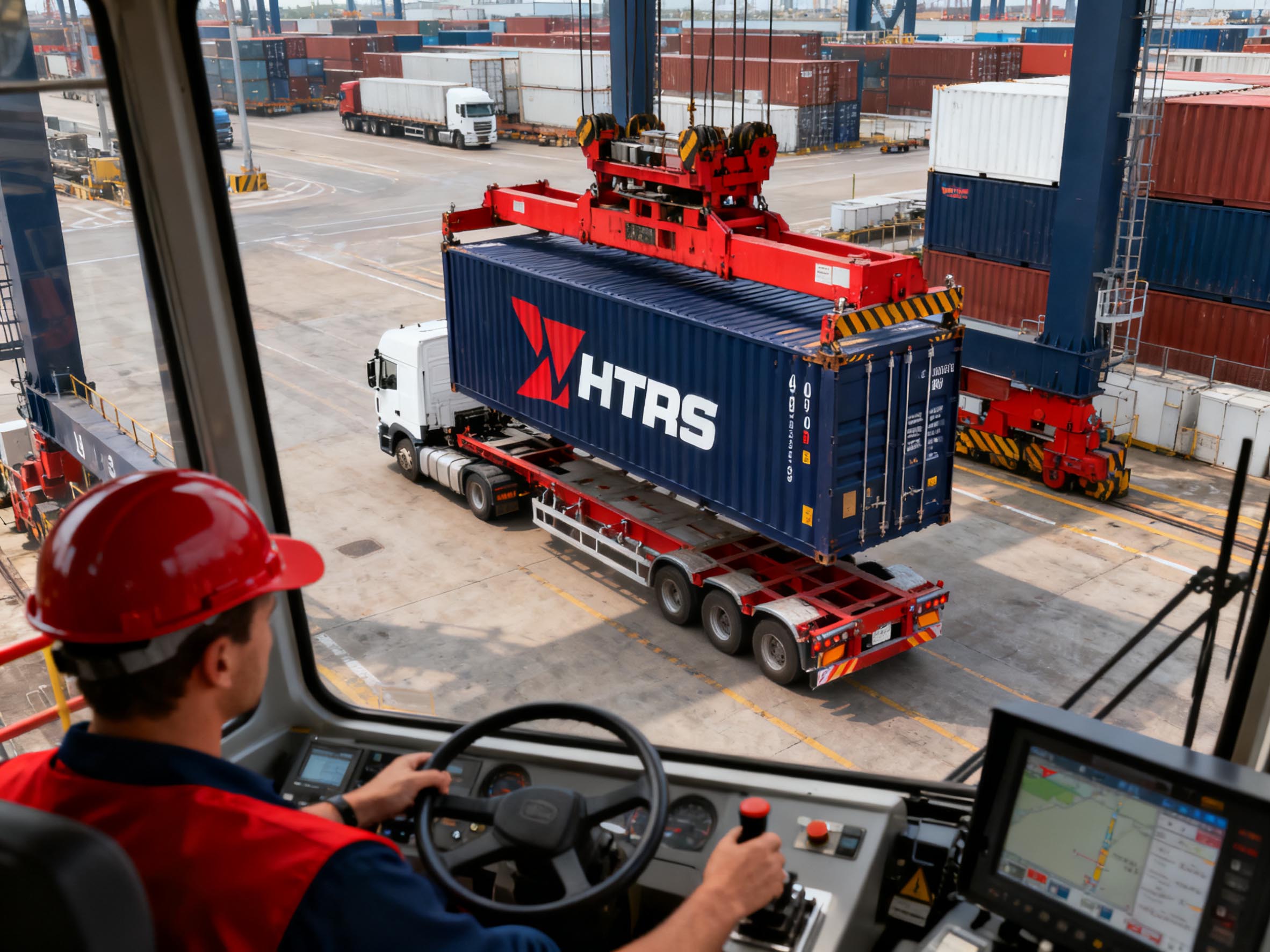
Most West African importers have never been to Tanger Med. Most of their cargo has. Located at the northern tip of Morocco, just across the Strait of Gibraltar from Spain, Tanger Med is the largest container port in Africa and the primary transshipment hub connecting deep-sea China-origin vessels to the feeder services that deliver cargo to ports across West and Central Africa.
Understanding what happens at Tanger Med — and when it goes wrong — is useful knowledge for any importer whose cargo regularly transits this port.
What Tanger Med Is and Why China-Africa Cargo Routes Through It
Tanger Med handles over nine million TEU (twenty-foot equivalent units) of cargo annually. It operates 24 hours, has deep-water berths capable of accommodating the largest container vessels afloat, and sits at the intersection of trade routes between Europe, Asia, and sub-Saharan Africa.
For the China-West Africa corridor, Tanger Med serves as the break-in-bulk point between the long-haul deep-sea leg and the shorter regional feeder services. A large vessel from Shanghai or Ningbo carries cargo for multiple West African destinations. Rather than calling at each port individually — which would require a much longer voyage — the vessel calls at Tanger Med, transfers cargo to smaller feeder ships, and those feeders distribute cargo across West African ports. The economics work for the carrier; the transit time implication is real for the importer.
How the Transshipment Connection Works in Practice
Your container arrives at Tanger Med on the main vessel from China. It is discharged, moved to a designated transshipment yard, and waits for the connecting feeder vessel bound for your destination — Douala, Apapa, Abidjan, Dakar, Lomé, or another West African port.
The connection time — the gap between the main vessel's arrival and the feeder's departure — is what determines whether your container flows smoothly through the hub or gets held over. Scheduled connection windows vary by service and carrier, ranging from as little as 12 hours to as long as 5 to 7 days. Longer connection windows are safer but add transit time. Shorter ones create risk: if the main vessel arrives even slightly behind schedule, the connection can be missed.
⚠️ Watch Out: A missed feeder connection at Tanger Med means your container waits for the next feeder departure to your destination port. On some West Africa routes, that next departure is 5 to 10 days away. The container continues to accumulate transit time at a hub you've never visited, for reasons entirely outside your control. This isn't an occasional exception — it happens with predictable frequency on busy services and during peak volumes. Build the possibility of a missed connection into any West Africa delivery commitment that is time-sensitive.
What Tanger Med Routing Means for Your Cargo
-
Transit time range widens. A China-to-Douala service routing via Tanger Med has a quoted transit time — say 33 days — and a realistic range — 30 to 42 days when connection risk and feeder frequency are factored in. The quoted time assumes a smooth connection; the range reflects what actually happens across a year of shipments.
-
Your container is handled twice. Discharge from the main vessel, yard storage at Tanger Med, loading onto the feeder — each handling is a potential point of container damage, seal integrity question, or documentation discrepancy. For sensitive cargo or high-value goods, two additional handling events matter.
-
Cargo tracking goes quiet between connections. Many importers notice that shipment tracking stops updating when cargo is in the Tanger Med yard. This is normal — yard movements within the hub don't always generate visible tracking events. It doesn't mean something is wrong. It does mean the period between "arrived at transshipment port" and "departed on feeder" is a black box for most tracking systems.
👉 Pro Tip: When comparing routing options for time-sensitive West Africa cargo, ask CALL's Commercial team to specify the scheduled connection window at Tanger Med — not just the total transit time. A routing with a 5-day connection window and a quoted transit of 36 days is more reliable than one with an 18-hour connection window quoted at 32 days. The 4-day quoted difference can easily become a 10-day actual difference when a connection is missed. For a full picture of how transshipment routing affects your China-Africa shipments, see: Transshipment Hubs: Friend or Foe for African Importers?
Want to compare direct and Tanger Med routing for your next shipment?
CALL's Commercial team quotes both routing options with connection window details so you can choose based on reliability, not just price.
Get a Quote →Last reviewed: June 2026 · Category: Ports & Terminals
Related articles: 45 Days. 9 Stages. One Shipment. · Shipping to Nigeria · Importing into Cameroon · Smart Planning to Avoid Demurrage & Detention