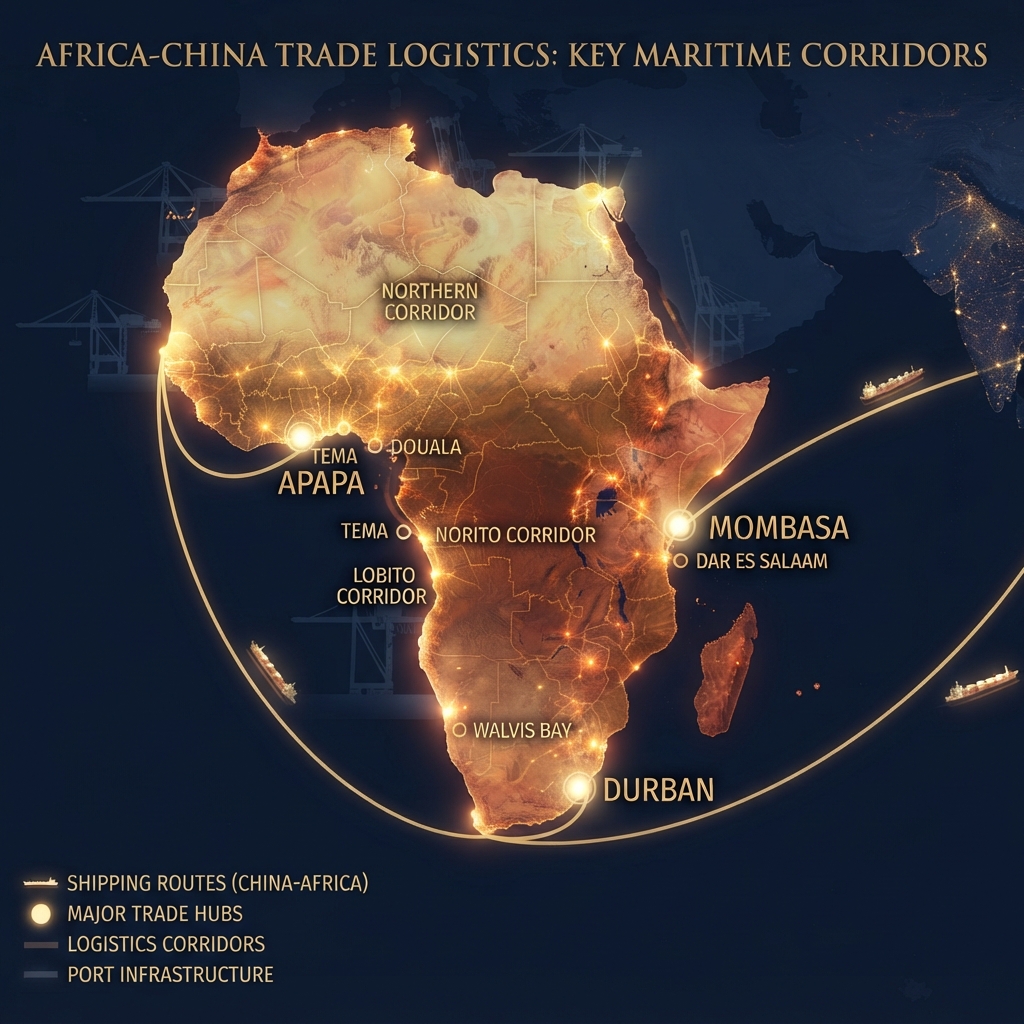
Form M. ECTN. SONCAP. PVoC. If you've imported from China to Africa more than a few times, you've probably heard at least one of these. If you haven't, and you're about to ship, read this now rather than after your cargo arrives and clearance suddenly can't proceed.
These aren't customs clearance documents. They're pre-shipment authorisation requirements — schemes that must be in place before the vessel leaves China, administered by different authorities in your destination country, and impossible to retroactively obtain once cargo is already at the port. That's what makes them different from a missing packing list or a wrong HS code, both of which are painful but fixable after the fact. A missing Form M or ECTN isn't a fixable error once cargo has arrived. It's a stopped shipment.
For context on where these fit in the broader clearance picture, see Why Your Cargo Is Stuck at Customs — and How to Fix It, specifically Cause 4.
Why These Schemes Exist
None of these were introduced arbitrarily. Most exist to give governments visibility over what's being imported, manage foreign exchange outflows, or enforce product safety before goods reach the market rather than after. Understanding the logic makes it easier to take them seriously before they become an active problem — they're enforced because the governments behind them actually care about compliance, not because bureaucracies need something to do.
The Main Requirements by Market
ECTN / BESC — West & Central Africa
Most West and Central African markets — Cameroon, Togo, Benin, DRC, Côte d'Ivoire, Senegal, and Guinea among them — require an Electronic Cargo Tracking Note (ECTN), or BESC (Bordereau Electronique de Suivi de Cargaison) in French-speaking markets, registered online before the vessel departs. Your forwarder handles the registration, but they need your confirmed B/L details, cargo description, and vessel information before departure.
Form M — Nigeria
All imports into Nigeria above a minimum threshold require a Form M, issued by a Nigerian commercial bank before the goods ship. It ties your import to Nigeria's foreign exchange regime and must reference the exact invoice value and supplier. Without a valid Form M already in place when cargo arrives, customs clearance cannot begin — not with a penalty, not with a workaround. Cannot begin.
SONCAP — Nigeria
Regulated goods entering Nigeria — electronics, building materials, chemicals, toys, and others — require SONCAP (Standards Organisation of Nigeria Conformity Assessment Programme) certification. An approved inspection company (SGS, Bureau Veritas, Intertek, or COTECNA) must conduct a physical factory or product inspection in China before loading. No SONCAP on arrival means mandatory re-inspection at destination, at your expense.
NAFDAC — Nigeria
Food products, beverages, drugs, cosmetics, and medical devices entering Nigeria require NAFDAC (National Agency for Food and Drug Administration and Control) registration before importation. Registration happens in Nigeria but must be complete before goods ship. Some product categories additionally require a pre-shipment inspection in China by a NAFDAC-approved company before the container is sealed.
| Scheme | Markets | Must Be Done |
|---|---|---|
| ECTN / BESC | Cameroon, Togo, Benin, DRC, Côte d'Ivoire, Senegal, Guinea | Before vessel departure |
| Form M | Nigeria | Before shipment |
| SONCAP | Nigeria (regulated goods) | Before loading in China |
| NAFDAC | Nigeria (food, drugs, cosmetics) | Before shipment |
| PVoC | Kenya, Tanzania, Uganda, Rwanda, Ethiopia | Before loading in China |
What Happens When These Are Missing
⚠️ Watch Out — missing these has specific, documented consequences, not vague "delays." A retroactive ECTN registration — for markets that allow it at all — costs $200 to $500 per document and attracts destination port fines that in some markets reach up to 20% of the cargo FOB value. Cargo arriving in Nigeria without a valid Form M stays in port, accumulating daily demurrage and detention, while a banking and customs resolution process runs its course — weeks at minimum, sometimes months. Goods arriving without SONCAP or PVoC face mandatory re-inspection at your expense; if they fail, the outcome is forced re-export or destruction, neither of which is covered by standard marine cargo insurance.
👉 Pro Tip: Confirm which schemes apply to your cargo type and destination before the booking is placed — not before the vessel sails, not when customs flags a problem. Your forwarder or destination broker can give you the full list in one email. Ask explicitly, because not every forwarder volunteers this information unless you know to request it. The right broker tells you about these requirements before you've asked.
Not sure which pre-import schemes apply to your next shipment?
Our Customs & Compliance team confirms all pre-departure requirements for your cargo type and destination before the booking is placed.
Talk to Our Team →Last reviewed: June 2026 · Category: Customs & Compliance
Related articles: Why Your Cargo Is Stuck at Customs · HS Codes: Getting It Wrong Is Expensive · How to Choose a Reliable Customs Broker in Africa · Document Checklist