Nigeria runs the largest import market in West Africa and one of the most complex clearance environments on the continent. For Chinese exporters and their Nigerian clients, the opportunity is substantial — so are the requirements. Form M. SONCAP. NAFDAC. Apapa congestion. Forex allocation. Each of these is a real operational variable, not a formality, and each has contributed to a shipment running weeks over schedule for an importer who wasn't prepared for it.
This guide covers the Nigeria-specific requirements that apply before your cargo leaves China, the port realities you'll face at arrival, and the preparation approach that keeps clearance moving rather than stopping.
Apapa and Tin Can Island: Two Ports, One Corridor
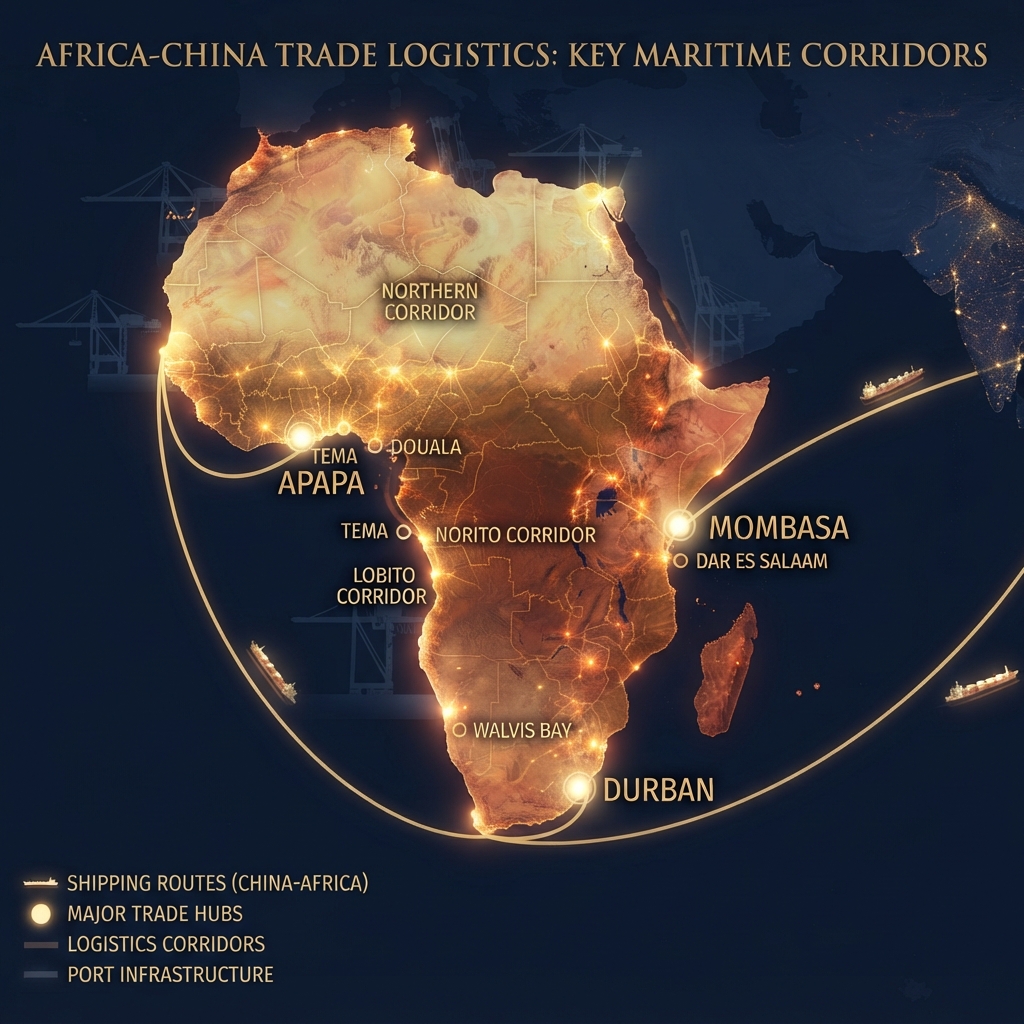
Lagos handles Nigeria's containerised imports through two adjacent terminals: Apapa and Tin Can Island. Both sit on Lagos Harbour, both serve the same commercial catchment, and for most importers the difference is decided by their clearing agent's terminal access and the carrier's discharge port rather than a deliberate commercial choice.
Apapa is the older, larger terminal and historically handles a greater share of cargo volume. Tin Can Island was developed partly to relieve Apapa's congestion and handles a growing proportion of containerised imports. Both experience the same fundamental constraint: a single access road connecting the port complex to the Lagos road network, which creates the congestion that Nigeria imports by sea are notorious for.
Transit times from China to Lagos via the Suez Canal typically run 30 to 38 days under normal routing conditions. Cape of Good Hope re-routing, which some carriers have employed in response to Red Sea disruptions, extends this by 8 to 14 days. Build that variability into your planning window — see Your Cargo Takes 45 Days from China for the full transit picture.
Nigeria's Pre-Shipment Requirements: The Full List
Nigeria has more pre-shipment requirements than almost any other African import market. Every one of them applies before the vessel leaves China. None can be remedied after arrival.
-
Form M — all imports above a minimum value threshold require a Form M, obtained from a Nigerian commercial bank before goods are shipped. It ties your import to Nigeria's foreign exchange allocation regime, references your specific invoice value and supplier, and must be in place before clearance can begin. Without it, your cargo physically cannot be cleared through Nigerian customs under any circumstances. Form M processing through Nigerian banks typically takes 3 to 10 working days. See: Pre-Import Verification Schemes.
-
SONCAP certificate — regulated product categories including electronics, building materials, chemicals, toys, and several others require SONCAP (Standards Organisation of Nigeria Conformity Assessment Programme) certification before loading in China. This involves a factory or product inspection by an approved company — SGS, Bureau Veritas, Intertek, or COTECNA — and the issuance of a Certificate of Conformity. Allow 2 to 4 weeks for the inspection and certification process. Goods arriving without SONCAP face mandatory re-inspection at destination, at the importer's expense.
-
NAFDAC registration — food products, beverages, drugs, cosmetics, and medical devices require NAFDAC (National Agency for Food and Drug Administration and Control) registration. This is done in Nigeria but must be complete before goods ship. Some categories require an additional pre-shipment inspection in China by a NAFDAC-approved company. An unregistered product can be seized at the port of entry.
-
PAAR (Pre-Arrival Assessment Report) — importers are required to apply for a PAAR through the Nigerian Customs Service before the vessel arrives. This triggers an assessment of duties and levies so that the importer can prepare payment in advance, reducing clearance time after discharge.
⚠️ Watch Out: The Form M must reference your exact invoice value and supplier details. If either changes after the Form M is issued — a price adjustment, a change of supplier, a revised quantity — the Form M must be amended before the cargo ships. An amended Form M requires a fresh bank process and adds time. Lock your commercial terms before initiating the Form M application.
Customs Clearance at Lagos Port
Nigeria Customs Service operates an electronic clearance system through which your broker lodges the customs entry, attaches all required documents, and the system generates a risk assessment. Nigeria's customs authority is known for active examination — a significant proportion of shipments receive some level of physical inspection, and the examination queue at busy periods adds days independent of documentation quality.
Duties are calculated on the CIF value of the goods (cost plus insurance plus freight to the Nigerian port) using Nigeria's tariff schedule. Your HS code must be confirmed before the invoice is issued — duty rates vary significantly across adjacent headings and a misclassification in a high-duty category is expensive to correct after the fact. The declared customs value is also actively reviewed; keep your payment records organised and accessible.
A clean clearance in Lagos typically takes 7 to 14 working days from vessel discharge. A clearance with a documentation gap, a contested HS code, or a missing pre-import authorisation runs considerably longer — during which demurrage and detention are accumulating at rates that make Nigerian ports among the most expensive on the continent for delayed clearances. See: Managing Demurrage and Detention.
Practical Planning for Nigeria Shipments
6–8 Weeks Before Sailing
Initiate Form M through your Nigerian bank. Begin SONCAP and NAFDAC processes for regulated cargo. These run in parallel but both take time — starting late is the single most common cause of a shipment that arrives in Lagos without the required authorisations.
Before Vessel Departure
Confirm Form M is active and all values match your final invoice. Confirm SONCAP certificate is issued and in your forwarder's hands. Register the PAAR application. All of these are non-negotiable pre-departure steps.
At Document Issuance
Send scanned shipping documents to your Lagos customs broker the moment they're issued. Pre-arrival clearance preparation in Nigeria, including PAAR registration, can and should begin before the vessel arrives.
Port Access Planning
Lagos port congestion is structural and persistent. Your transporter should be briefed and positioned before the release order is issued. Factor a minimum 2 to 3 working days from release to physical container exit into your planning — longer during peak periods.
👉 Pro Tip: Currency availability affects payment of duties and terminal charges in Nigeria. Budget for potential FX delays when calculating how quickly you can settle customs assessment. Importers who have forex arranged before the vessel arrives clear faster than those who start the FX process after the PAAR is received.
Shipping from China to Lagos?
Our Trade & Compliance team manages Form M coordination, SONCAP logistics, and Lagos broker relationships so your pre-shipment requirements are in place before the vessel sails.
Get a Quote →Last reviewed: June 2026 · Category: Regional Focus
Related articles: Pre-Import Verification Schemes · Why Your Cargo Is Stuck at Customs · Managing Demurrage & Detention · Importing into Cameroon · East Africa: Mombasa vs. Dar es Salaam